People of Penela · Profile 02
Born in PenelaSalvador Dias Arnaut
The Penela-born scholar who read national history through documents, landscapes and the lives of ordinary people.
Salvador Dias Arnaut moved between medicine and history without losing sight of the human life inside either discipline. Born in Penela, he became a professor at the University of Coimbra and a respected medieval historian. Yet Penela, Rabaçal and Germanelo remained more than subjects to him: they were places he walked, researched and actively helped to preserve.
Two disciplines, one humanist
Salvador Manuel Dias dos Santos Arnaut was born in Penela on 25 October 1913. He completed a medical degree at the University of Coimbra in 1940 and practised medicine before following an equally strong call towards the humanities. He later graduated in Historical and Philosophical Sciences and completed a doctorate in History in 1960.
At the Faculty of Arts and Humanities in Coimbra, he taught generations of students and developed a substantial body of research. His best-known academic interests included medieval Portugal, the succession crisis at the end of the fourteenth century and the social world behind political events.
History with people inside it
Colleagues remembered Arnaut as a rigorous reader of documents who was never satisfied with dates and institutions alone. He wanted to understand how people imagined war and peace, how they lived, and what a landscape could reveal about communities across time.
That approach made local history intellectually serious rather than secondary. His work on Penela and the Rabaçal region treated the municipality as a place through which larger questions about settlement, power, food, movement and identity could be explored.
Germanelo as research and responsibility
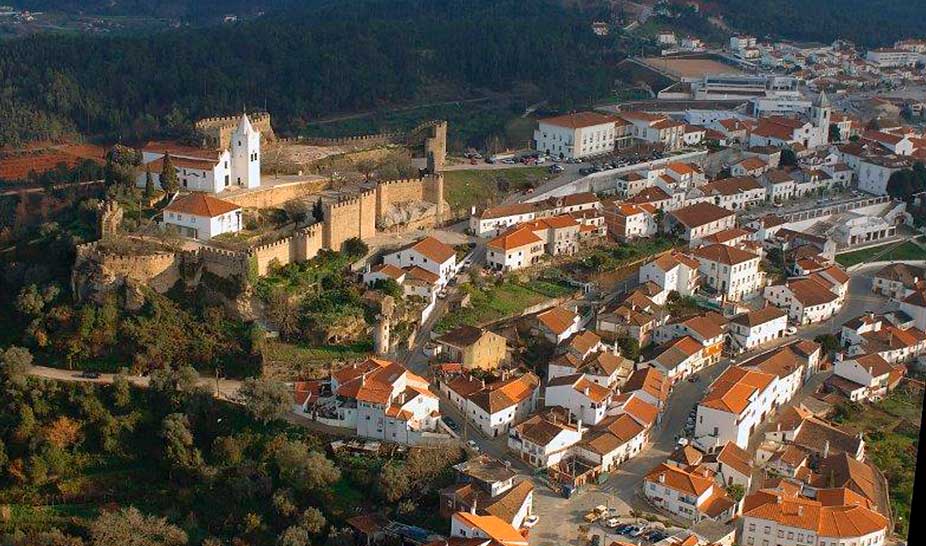
Arnaut had a deep attachment to Germanelo Castle and the surrounding Ladeia landscape. He acquired the castle ruins and helped preserve them, including the reconstruction of part of the northern wall along the historic line. The intervention is itself part of the monument’s modern story and should be understood as twentieth-century stewardship, not untouched medieval fabric.
For Arnaut, Germanelo was simultaneously evidence, viewpoint and place of reflection. That combination—scholarship, physical care and emotional attachment—captures the distinctive way he related to Penela’s past.
A house for local history
In 2010, the Municipality of Penela, the University of Coimbra’s Faculty of Arts and Humanities and Arnaut’s family created the Centro de Estudos de História Local e Regional Salvador Dias Arnaut. It holds his private collection of monographs alongside publications from municipalities across Portugal.
The centre turns a personal legacy into public infrastructure for research, meetings and teaching. It also makes an important statement: local history is not nostalgia. It is an open field of evidence and questions that deserves the same care as any national narrative.
Read the public record.
This profile is an editorial synthesis, not a reproduced municipal page. These primary and institutional sources support the dates, roles and local connections above.