Visit / Penela explained
Roman Villa of Rabaçal
Mosaics, baths and the remains of a remarkable 4th-century rural residence.
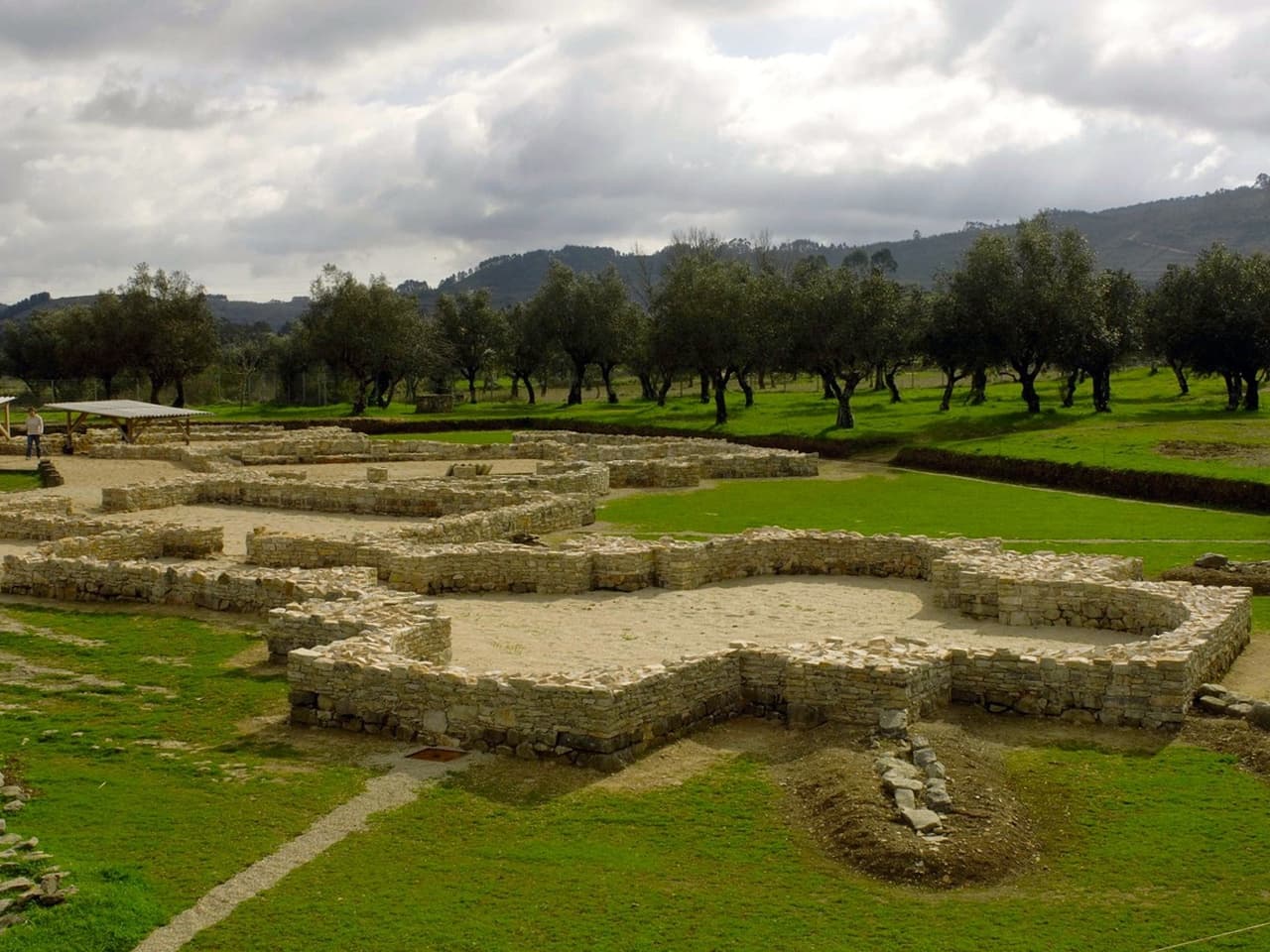
The museum and archaeological site interpret Roman life in the Rabaçal valley. Visits to the site should be arranged in advance.
Make the visit work
Contact the museum first, confirm the time and allow enough time for both the interpretation space and the archaeological remains. A museum technician accompanies site visits.
A Roman estate in the Rabaçal valley
The villa dates principally to the fourth century and stood about 12 kilometres south of Conímbriga, within that city’s territory and near the Roman road linking Olisipo—Lisbon—to Bracara Augusta—Braga.
It was not a single grand house isolated from work. The complex brought together a residential area, baths and a rural or productive area, making it possible to read comfort, agriculture and estate management in one place.
Read the building in three parts
The residential pars urbana developed around an unusual octagonal portico aligned to the cardinal points. The more prestigious western rooms included internal gardens and mosaic pavements, while an octagonal tower marked the south-facing entrance.
Between the residence and working area stood the baths, with cold, warm and hot spaces traditionally identified as the frigidarium, tepidarium and caldarium. Farther north, the rural and storage areas supported servants, grain, pressing, animals and other agricultural activity.
Why the mosaics matter
Stone, ceramic and glass tesserae create geometric, plant and figurative panels across the floors. They were decorative, but they also signalled status and connected a rural residence in Central Portugal to artistic fashions circulating across the late Roman world.
Look beyond a single intact image. Borders, repeated geometry, colour choices and the placement of panels help explain how movement through the house was staged.
Discovery, excavation and later life
Systematic attention began with information gathered for the Roman archaeological map of the Conímbriga region in 1979. Excavation campaigns started in 1984 with support from specialists, residents, young volunteers, the Rabaçal parish council and Penela municipality.
The place did not disappear from human use when Roman occupation ended. In the 15th and 16th centuries, part of the area was reused as a cemetery associated with the Chapel of Senhora da Graça.
Museum first, archaeological site second
Begin at the Rabaçal Museum Space on Rua da Igreja. The interpretation there gives the objects, plan and terminology needed to understand foundations in the landscape rather than seeing only low walls.
The published museum schedule is Tuesday to Sunday, 10:00–13:00 and 14:00–18:00, with closure on Monday and specified holidays. Site visits require advance booking and accompaniment by a museum technician; confirm hours and price before travelling.
- Book the archaeological visit
- Start at the museum
- Allow time for both locations
- Ask about accessibility and weather conditions
We present the useful information here. The linked public record remains the authority for forms, legal conditions and last-minute changes.